
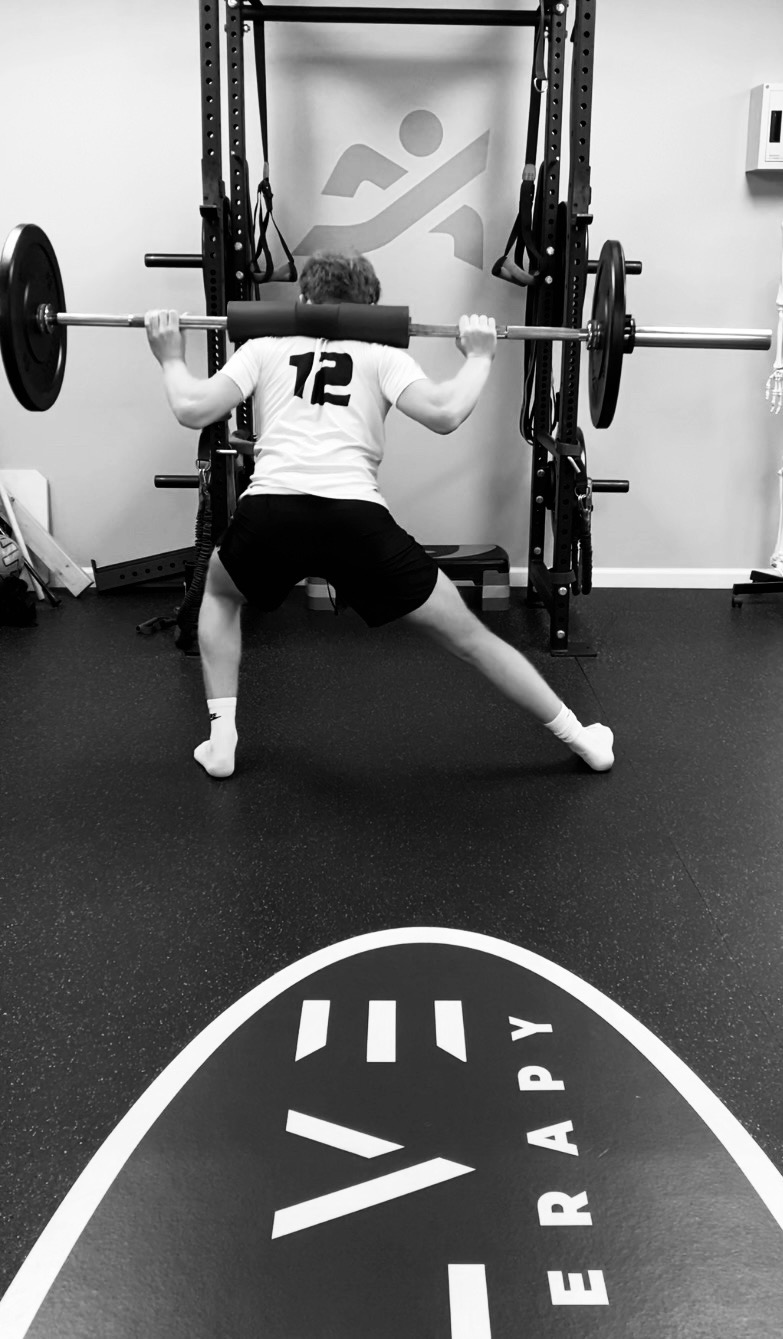
We physical therapists talk about the benefits of therapy versus rest in returning to sports time and time again (https://www.resolveny.com/return-to-sport-after-ankle-injury/). But what about a spine growth plate fracture?
Most of what we hear in our region involves physicians prescribing long periods, often months, of rest before returning to sports. In many cases, there is nothing structured between the injury and full participation. I mean, it is the spine. It is a structure so feared in our society, even by health professionals, that avoiding movement and spinal loading is often seen as protective. Supposedly this prevents future “bad” backs. I digress.
So How Do We Know Physical Therapy Helps?
A new research article* from the British Journal of Sports Medicine studied 64 adolescent athletes with an active spine stress fracture called spondylolysis. This injury affects a small portion of the vertebra called the pars interarticularis.
All athletes had an MRI at the time of injury and again three months later. Researchers split them into two groups. One group started physical therapy immediately after diagnosis. The other group waited to begin therapy until their pain had fully resolved.
What Did Physical Therapy Include?
Treatment focused on core strengthening, hip strengthening, peri scapular strengthening, flexibility work, and manual therapy when needed. The goal was not to push athletes into pain, but to restore movement, strength, and control in a safe and progressive way.
The Results Were Not Subtle
The athletes who started physical therapy right away improved faster in pain and function. The difference between groups was statistically significant at one month.
More importantly, the early PT group returned to sports much sooner. Their median return to play time was 74 days, compared to 112 days in the rest first group. That is a 38 day difference.
MRI findings also showed meaningful changes. The multifidus muscle, one of the key stabilizers of the spine, was larger in the immediate PT group. The group that rested first showed more signs of muscle atrophy. Healing of the fracture occurred at least as well in the early PT group, with no evidence that therapy slowed bone recovery.
No adverse events occurred. The recurrence rate of low back pain was just 3 percent in the immediate PT group, compared to 29 percent in the group that rested first.
What This Likely Means
The authors suggested that building muscle, or at least preventing muscle loss, helped protect the spine and support recovery. Keeping athletes active in a controlled and progressive way may reduce fear, deconditioning, and long term risk.
This challenges the idea that long periods of rest are the safest option.
Why This Matters for Young Athletes
Early physical therapy for spine stress fractures appears to help athletes return sooner, return stronger, and reduce the risk of reinjury. It supports healing rather than delaying it.
These are exactly the injuries and athletes we work with at Resolve. If you or someone you know has been told to rest and wait with no plan in between, this research is worth bringing to the conversation. Educating decision makers matters.
John De Noyelles, PT, DPT, OCS, CSCS
The full article can be accessed here:
https://bjsm.bmj.com/content/bjsports/60/2/125.full.pdf
* Selhorst M, Sweeney E, Martin LC, Yang J, Benedict J, Brna M, Fischer AN. Immediate physical therapy is beneficial for adolescent athletes with active lumbar spondylolysis: A multicentre randomised trial. British Journal of Sports Medicine. 2026;60(2):125–132. doi:10.1136/bjsports-2025-110606.
