
Joe Myhren, PT, DPT, SCS, CSCS
Sports Physical Therapist | Resolve Physical Therapy
The Seasonal Shift Back to Activity
As winter fades and the days grow longer, something shifts—not just in the weather, but in our energy! Spring gives us free energy and invites us back outside. Fields fill up, courts buzz with activity, runners return to the roads, and families spend more time moving together. The change in season brings renewed motivation for sport, recreation, and physical activity across all age groups.
However, while enthusiasm may return quickly, the body often requires a more gradual transition. After months of colder temperatures, reduced outdoor movement, and potential inactivity, muscles, tendons, and joints may not be prepared for sudden increases in activity intensity or volume. This seasonal shift makes structured preparation critical.
A Dynamic Warm-Up serves as the bridge between winter inactivity and spring performance.
What Is a Dynamic Warm-Up?
Dynamic warm-up involves controlled, movement-based exercises that actively take joints through functional ranges of motion while progressively increasing heart rate and neuromuscular activation. Unlike prolonged static stretching, dynamic movements prepare the body for performance without temporarily reducing force production.
Physiologically, dynamic warm-up increases muscle temperature, enhances nerve conduction velocity, improves oxygen delivery, and activates stabilizing muscle groups. These adaptations improve coordination, balance, and power output—key components for both athletic performance and injury prevention.
What the Research Shows
Fradkin et al. demonstrated in a systematic review that warm-up interventions consistently improved strength, sprint, and power performance.¹ The authors concluded that increased muscle temperature and neural activation likely explain these performance benefits.
Similarly, Behm and Chaouachi found that dynamic stretching enhances movement performance, whereas prolonged static stretching may temporarily reduce maximal strength and power output.²
Together, these findings support the use of dynamic warm-up prior to athletic and recreational activity.
A Simple Spring Dynamic Warm-Up Sequence
The following dynamic warm-up sequence is appropriate for youth athletes, recreational adults, and older individuals transitioning into higher activity levels during the spring season.
Warm-Up Phase (3–5 minutes)
- Light jogging or brisk walk
- Jumping jacks or heel raises
Dynamic Warm-Up Sequence (8–10 minutes total)
High Knee Pull – Improves posterior hip mobility and balance control.
Quad Pull – Enhances anterior thigh flexibility and posture.
Figure 4 Stretch (Standing) – Targets gluteal and hip external rotation mobility.
Hamstring Touch – Promotes hamstring flexibility and neural preparation.
Walking RDL – Activates posterior chain and improves single-leg balance.
Lateral Groin Stretch – Improves adductor mobility and frontal plane control.
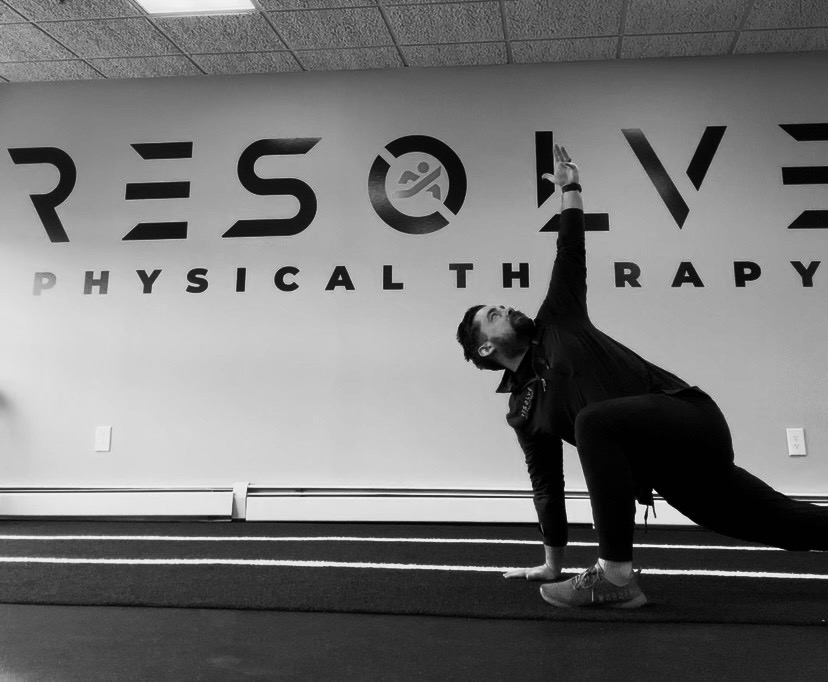
World’s Greatest Stretch – Integrates hip mobility with thoracic rotation.
Walking Lunges – Activates glutes and quadriceps while reinforcing lower-extremity alignment.
Walking on Toes – Strengthens calves and enhances ankle stability.
Lateral Shuffle – Prepares frontal plane movement and agility.
Back Pedal – Reinforces posterior chain coordination and deceleration control.
Each drill should be performed over approximately 10–20 yards with smooth, controlled transitions between movements. Intensity should gradually increase as the sequence progresses.
Optional Sport-Specific Activation (3–5 minutes)
- For runners: high knees, butt kickers, skipping progressions
- For cyclists: thoracic mobility, stationary leg strengthening
- For court sport players: lateral shuffles, quick starts, rotational prep
For youth populations, rhythm and engagement are important. For adults returning to activity, emphasis should be placed on posture and control. For older adults, movement range can be modified while maintaining flow and progression.
Long-Term Health and Injury Prevention
Spring activity should be approached with longevity (this season and throughout life) in mind. Injury rates often increase during seasonal transitions due to sudden workload spikes. A consistent dynamic warm-up routine reduces this risk by preparing musculoskeletal tissues and enhancing neuromuscular efficiency.
Ultimately, dynamic warm-up is not merely a performance enhancer—it is a foundational health strategy. It supports joint integrity, muscular coordination, circulation, and safe progression into higher-intensity movement. As communities move back outdoors this spring, preparation should be viewed as essential rather than optional.
By investing 10–15 minutes in structured dynamic preparation, individuals of all ages can improve performance, reduce injury risk, and fully enjoy the renewed energy that spring provides.
We can’t wait to see you all outside!
About the Author

Joe Myhren, PT, DPT, SCS, CSCS
Sports Physical Therapist — Florida, NY
Joe is a board-certified Sports Clinical Specialist with over 10 years of experience in orthopedic and sports physical therapy. He blends strength and conditioning expertise with evidence-based rehabilitation to help athletes return to sport stronger than before. Joe specializes in ACL rehab, return-to-throw protocols, and performance integration, and has worked with athletes from the NFL, MLB, Olympic programs, and NCAA Division I.
