Jaclyn McCullough, PT, DPT
Pelvic Floor Physical Therapist | Resolve Physical Therapy
Pregnant women are met with far too many lists of things they can’t do. As a pelvic floor physical therapist, I want to give you a new list of things you can be doing during your pregnancy.
I want to preface this by saying, pregnancy is experienced differently by everyone. Some people have little to no morning sickness while others are debilitated by it. For some it is their first pregnancy and they might have a bit more free time compared to someone with toddlers at home. At the end of the day, everyone is doing the very best they can and no one should be judged for what they are or are not doing to prepare themselves for labor and delivery and postpartum. The things I recommend can be done in hours or minutes across the week; it just depends on what fits your life at any particular time. If you ever need guidance, a pelvic floor PT can always help.
Below are the top four things I recommend prioritizing during pregnancy to optimize labor and delivery outcomes and postpartum health
- Strength Training
- Pelvic Floor Coordination
- Cardiovascular Training
- Hip mobility and core strength
Strength Training
If I could only pick one thing to encourage pregnant women to do on the entire list, strength training would be it. The benefits of building muscle during pregnancy cannot be understated. Strength training is often the best way to improve aches and pains during pregnancy. Research has shown that women who participate in strength training have a better pregnancy experience, improved likelihood of a vaginal delivery, decreased time of the second stage of labor and a quicker postpartum recovery.
Many women are nervous to continue or start strengthening during their pregnancy due to fears of hurting themselves or the baby. A pelvic floor physical therapist can help get you established with a program as well as work on your form as you grow across your pregnancy. Whichever form of strength training works best for you (CrossFit, following a program at home, working with a personal trainer, attending group fitness classes, etc.) it is worth investing the time in. Many quality strengthening programs can be done within your home, in a short period of time, with only a few dumbbells or kettlebells.
Why choose strength training over all the other things on this list? It is no secret that labor and postpartum are hard. No one has ever gone into something difficult in life and wished they were physically weaker for it.
Pelvic Floor Coordination
Notice I didn’t say Kegels? Coordination of the pelvic floor means having the ability to relax or lengthen the muscles AND contract or shorten the muscles whenever you want or need to. What exactly do each of these movements mean in terms of the pelvic floor?
Most of the time, the pelvic floor should be at rest. This means we are not holding any extra tension or doing a Kegel and we are not pushing downward as you would to have a bowel movement. The pelvic floor can then respond to activities we are doing as needed to support us appropriately. The pelvic floor needs to contract to stop us from urinating or having a bowel movement and to have an orgasm. It needs to relax to allow us to urinate and have a bowel movement as well as let something in/out such as in intercourse and when delivering a baby vaginally.
In order to have minimal pelvic floor related issues during pregnancy and postpartum, we need to learn how to do both of these things smoothly and under our own control. Being unable to control the movements results in difficulty during vaginal deliveries and incontinence during pregnancy and postpartum.
A pelvic PT can help you use movement and breathing techniques to better understand what is going on at your pelvic floor, building your awareness of the area, and therefore your control.
Cardiovascular Training
Over the course of pregnancy, even just going for a walk can become physically exhausting. As early as the first trimester, increases in blood volume mean your body is working at a higher metabolic rate than usual, even with just daily activities. As the baby grows, he or she pushes up on your diaphragm and rib cage, making it more challenging to take a deep breath. Additionally, many muscular aches and pains that accompany the changes to your body during pregnancy (go back up and re-read about strength training!) can further complicate things.
Despite all of this, we have two choices. Let it happen or work to reduce its impact.
There are many methods of cardio and the right one is whichever you enjoy and can do the most comfortably. Walking, running, swimming, cycling, rowing, HIIT style classes, etc., any and all can be beneficial and can vary across your pregnancy. The common misconception that your heart rate should not exceed 140 bpm has been long debunked. Being in better cardiovascular condition will also ease the labor and delivery process, particularly as it pertains to pushing. Even if you did not exercise prior to pregnancy, adding in this mode of exercise is almost always safe and beneficial. Research has shown that it can reduce common complications such as gestational diabetes and gestational hypertension.
Does cardiovascular training seem impossible due to how you are currently feeling in pregnancy? Once again, that’s where a pelvic PT can help.
Hip and Core Mobility
This can be done in many different ways and takes probably the least amount of time of all the options on this list.
Having adequate hip mobility is key for accessing positions that help the baby descend down the birth canal. The goal is to feel comfortable in different positions that target different levels of the pelvis and be able to relax your pelvic floor in those positions to ease the process of labor. This can be as simple as a 2-5 minute routine before bed, between work tasks or when playing with your toddler.
Some of my go to movements include:
- Cat/cow
- Adductor rock backs
- Pelvic tilts sitting on birth ball or edge of couch
- Deep squat – supported or unsupported
Core strength will inevitably decline across pregnancy as the abdominals stretch to accommodate the growing baby. However, we can continue to train the muscles which can then assist during the pushing phase of delivery and return to prior strength more quickly postpartum. The core, like many other muscles, functions in two ways – stability and mobility. The classic core stability exercise is a plank whereas the classic mobility exercise in a sit up. Contrary to what people will tell you in pregnancy, both are safe and encouraged if done with proper form. I like to start with stability and progress it to mobility.
- Stability – “the deep core”
- This is often done in terms of breathwork and cued to “hug the baby up and in”.
- Exercises to train this are usually things like planks or dead bug.
- Mobility – your obliques and “six-pack muscles”
- Sit ups
- Twisting
- Side bending
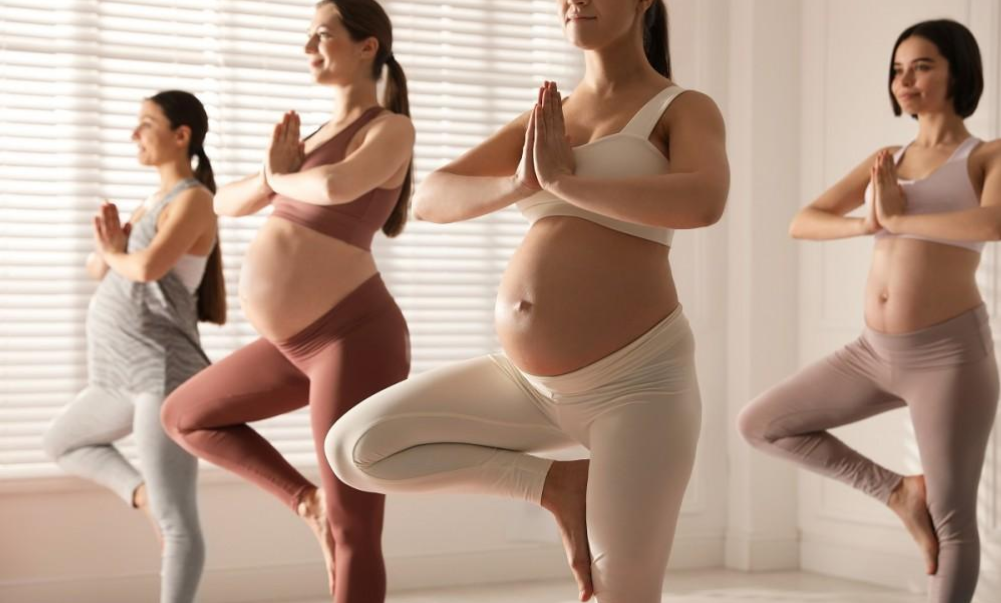
Prenatal yoga and pilates classes are great options to work on both hip mobility and core strength. A pelvic floor PT can provide guidance as your pregnancy progresses.
How do I start?
If all of this feels overwhelming or you are wondering when a good time to start would be, getting in touch with a pelvic floor physical therapist should be your next step. Regardless of where you are in your pregnancy and what your current activity levels are, a pelvic PT can help you establish a routine within your time constraints to maximize your function during pregnancy and postpartum.
About the Author

Jaclyn McCullough, PT, DPT
Pelvic Floor Physical Therapist — Montgomery, NY
Dr. Jaclyn McCullough, PT is a pelvic health physical therapist at Resolve Physical Therapy in Montgomery, NY. She earned her Doctor of Physical Therapy from Arcadia University and has specialized training in pelvic floor rehabilitation through Herman & Wallace. She is also a Certified Pregnancy and Postpartum Corrective Exercise Specialist.
Jaclyn works with women experiencing pelvic pain, pregnancy and postpartum issues, bowel and bladder concerns, and return-to-exercise challenges. Her goal is to help patients understand their bodies, move confidently, and get back to the activities they enjoy.
