

Round ligament pain is a common complaint amongst pregnant women, usually beginning at the end of the first or beginning of the second trimester. The pain is typically present on one or both sides of the lower belly and is often triggered by changes in position like standing up or rolling over.
We have one round ligament on each side of the uterus. They attach on the front/side of the uterus, go through the front of the pubic bone and then attach on the labia. The purpose of these ligaments is to provide structural support to the uterus.
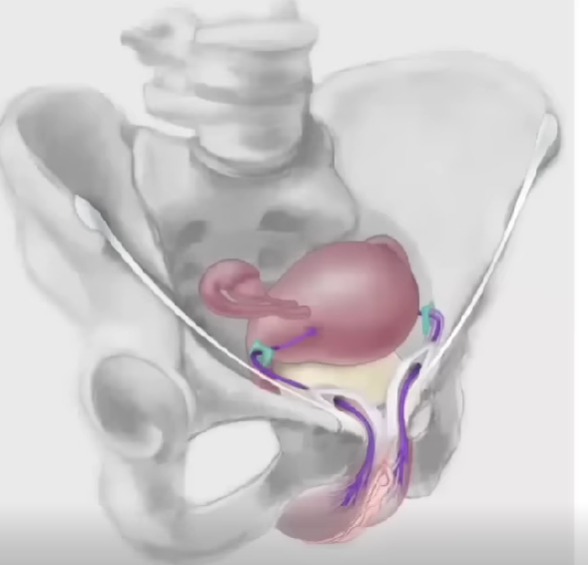
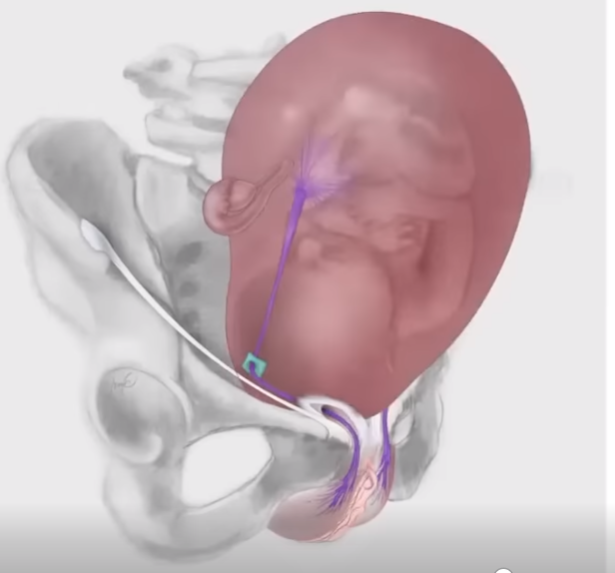
During pregnancy, as the uterus stretches, the round ligaments are tensioned. This can cause sharp pain during changes in position. Luckily, there are things you can do to ease round ligament pain.
Mobilization
- To mobilize or stretch the round ligament, you want to place a few fingers on the front/side of your low belly, right over the area where you typically feel a sharp pain. You can apply a gentle pressure up and in, almost as if you are trying to lift that side of your belly slightly. Hold your pressure and move in small circles.
Inversions
- Inversions are a great way to stretch the round ligament and create more space in the bottom of the uterus. This becomes especially helpful in not only providing relief from round ligament pain but also helping to create more space for the baby to get into a head down position as you get closer to your due date.
- To do an inversion, kneel on your couch and slowly lower your hands/forearms onto the floor in front of you so that your hips are lifted over your rib cage. Stay in this position for 30-60 seconds. It can be helpful to have someone there with you the first time you do this to help with positioning or getting back up.
- For more information, check out our blog, coming next week, on Inversions During Pregnancy.
Belly Support
- A well fitting belly band can provide support from below to reduce the strain on the round ligaments. Typically these are worn lower than you would expect, near your sacrum, and provide an upward pull to hug your belly upward from below. It should not be too tight – always make sure you can easily fit your hand between the band and your stomach.
If you are experiencing round ligament pain that won’t go away, you can schedule an appointment with a pelvic floor physical therapist to be assessed and address the issue. You do not have to live with this pain until the baby comes!
About the Author

Jaclyn McCullough, PT, DPT
Pelvic Floor Physical Therapist — Montgomery, NY
Dr. Jaclyn McCullough, PT is a pelvic health physical therapist at Resolve Physical Therapy in Montgomery, NY. She earned her Doctor of Physical Therapy from Arcadia University and has specialized training in pelvic floor rehabilitation through Herman & Wallace. She is also a Certified Pregnancy and Postpartum Corrective Exercise Specialist.
Jaclyn works with women experiencing pelvic pain, pregnancy and postpartum issues, bowel and bladder concerns, and return-to-exercise challenges. Her goal is to help patients understand their bodies, move confidently, and get back to the activities they enjoy.
